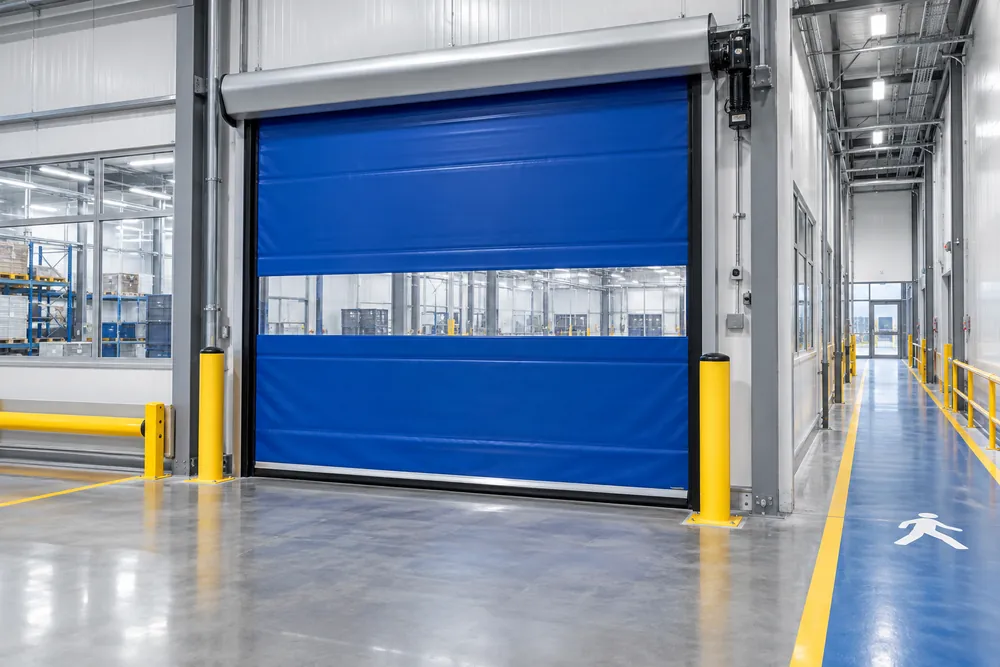
High-speed doors help manage frequent movements between commercial and industrial spaces. They can reduce the time an opening is left exposed, but choosing a faster door only makes sense when its operating cycle fits the process. We handle high-speed door enquiries for Leeds factories, distribution buildings and busy commercial facilities.
For a busy Leeds loading route, identify the vehicles, goods and people using the doorway, together with the number of daily movements. Forklifts, pallet trucks and pedestrians create different detection and protection needs. The space on either side, visibility and nearby traffic junctions can be as important as the door itself.
Design Around The Traffic Route
Flexible curtain doors are commonly considered for internal separation, while other fast-action constructions may suit more exposed openings. Air movement, pressure differences and the temperature on each side can affect the specification. Ask for confirmation that the proposed model suits the actual environment rather than relying on a general product description.
Activation may use a deliberate control input or suitable detection equipment. That activation system must be considered separately from the protective devices that help prevent injury. An opening sensor intended to detect an approaching vehicle is not automatically adequate protection for someone in the closing path.
The survey should examine approach distances, vehicle dimensions, available headroom and possible conflicts with services or existing doors. Where an outer security shutter is retained, the two systems may need coordinated operation. A fast flexible door should not be assumed to provide the same physical security as a separate security barrier.
Check The Process Before Installation
Food production, clean workspaces and temperature-controlled areas can need particular surfaces, seals or cleaning compatibility. The required performance should be defined by the premises and its process, then checked against the selected equipment. A standard fast-action door should not be described as a hygienic or cold-store solution without supporting product information.
Operators need clear instructions on normal use, fault reporting and what to do when a protective device activates. Repeated resets without investigation can conceal a defect or an unsuitable control arrangement. Include familiarisation and a documented handover in the agreed installation scope.
From Enquiry To Handover
Describe The Requirement
Send the postcode, door type and a brief description of the issue or project. Mention operating hours, delivery access and any restrictions that would affect a survey. Initial photographs should be taken without entering a hazardous area.
Assess The Opening
A competent assessment should establish dimensions, equipment condition, supports and the way people use the opening. It should also identify the access equipment and isolation arrangements needed for the proposed work.
Review The Proposal
Agree the scope, exclusions, programme and quotation before work starts. Check who is responsible for electrical supplies, building preparation and temporary access arrangements so the job can be coordinated with normal operations.
Test And Record
The completed work should be checked for safe operation and the relevant records supplied. Ask for instructions covering normal use and fault reporting, together with any maintenance requirements and outstanding actions.
Safety And Relevant Requirements
Workplace doors must be safely constructed and maintained under the Workplace (Health, Safety and Welfare) Regulations 1992, including Regulations 5 and 18. Upward-opening doors need protection against falling back, and powered doors need effective protection against trapping. Read the HSE workplace guidance.
BS EN 12453 addresses safety in use of powered doors, while BS EN 13241 addresses product performance for industrial and commercial doors. Standards inform the assessment but do not replace consideration of the actual risks at the opening. The applicable obligations and documents depend on the equipment and the work being undertaken, as explained in HSE guidance on door standards.
What Goes Into Your Door Quotation?
High-speed door cost depends on the door construction, clear opening, duty, controls and required environmental performance. Protective equipment, interlocks, electrical supply and building alterations can change the installation package. Ask which features are necessary for the assessed risks and which are optional operational additions.
Consider the availability of replacement curtains and compatible components, especially where the opening is important to production. A maintenance arrangement should reflect the expected use and manufacturer recommendations. Discuss how the route will operate if the door is unavailable so the business can plan a safe alternative.
Your Questions Answered
Will A High-Speed Door Improve Heat Retention?
A high-speed door can reduce the period an opening remains exposed during traffic movements. The effect on heat retention depends on the opening, temperature difference, air movement and usage. Compare the complete proposed arrangement, including seals and closing behaviour, rather than expecting a particular energy saving from opening speed alone.
Does A High-Speed Door Replace A Security Shutter?
A high-speed door does not automatically replace a security shutter. Flexible internal curtains are generally selected for managing traffic and separation, while security requirements may call for another barrier. Discuss the building’s closing procedure and insurer requirements so the proposal explains which function each door is intended to perform.